
The Cheapest Ways Americans Can Still Travel This Summer
Summer travel is supposed to be exciting, not stressful. But with rising airfare, higher gas prices, and more expensive restaurant meals, many Americans are wondering whether a summer trip is still within reach.
The good news? Travel doesn’t have to be off the table. While certain types of vacations have become pricier, others remain surprisingly affordable if you know where to look.
To help travelers plan smarter, InsureMyTrip researchers analyzed the latest transportation costs, airfare trends, and travel demand data from government and industry sources to identify the cheapest ways Americans can still travel this summer.
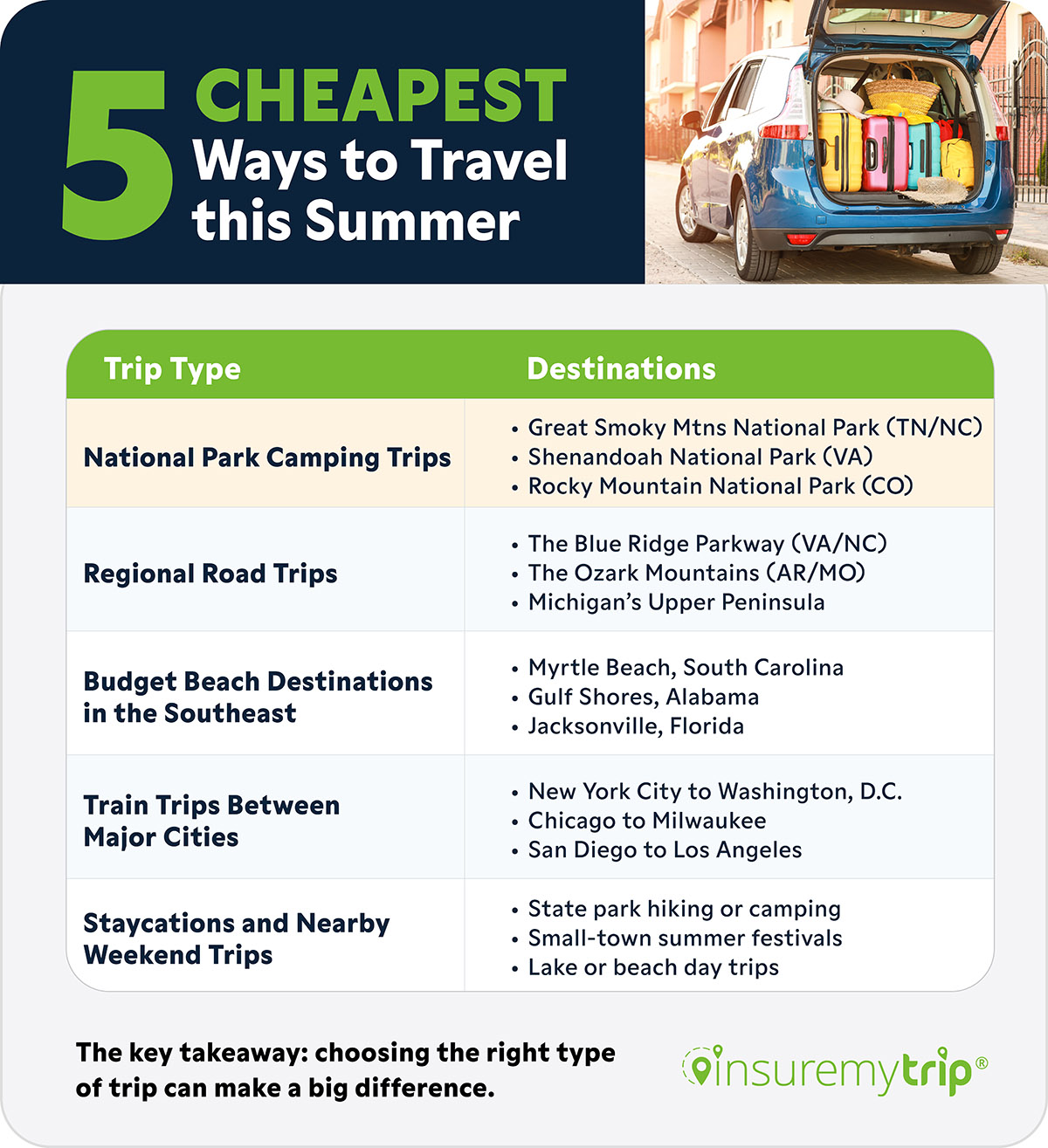
The key takeaway: choosing the right type of trip can make a big difference.
Why Summer Travel Feels More Expensive
Air travel costs have been rising again in 2026. According to U.S. Bureau of Labor Statistics inflation data, airline ticket prices increased 7.1% year-over-year as of early 2026.
Fuel prices are also playing a role. Jet fuel can account for a big chunk of airline operating costs, which means spikes in fuel prices often lead to higher airfare.
At the same time, travel demand hasn’t slowed down. Industry forecasts expect air travel to grow nearly 6% in 2026, showing that Americans still want to travel even as prices climb.
That’s why choosing the right travel style, rather than canceling a trip entirely, can help keep vacations affordable.

The 5 Cheapest Ways to Travel This Summer
Here are some of the most budget-friendly vacation styles Americans can consider this summer.
1. National Park Camping Trips
One of the cheapest vacations available in the U.S. is a camping trip to a national park.
Campgrounds in many national parks typically cost around $20–$35 per night, dramatically cheaper than hotels in popular tourist destinations. Park entrance fees usually cost about $30 per vehicle for a seven-day pass, making them especially affordable for families or groups.
Because activities like hiking, wildlife viewing, and ranger programs are often free, travelers can keep entertainment costs low while still experiencing some of the country’s most beautiful landscapes.
Great national parks for budget summer trips:
- Great Smoky Mountains National Park (TN / NC)
- Shenandoah National Park (VA)
- Rocky Mountain National Park (CO)
2. Regional Road Trips
Road trips have long been a classic American vacation, and they’re still one of the cheapest ways to travel.
Driving allows travelers to avoid expensive flights and split fuel costs among multiple passengers. It also provides flexibility to stay in budget motels, campgrounds, or short-term rentals.
Another benefit: many road-trip destinations feature free attractions like scenic drives, historic landmarks, and public parks.
Affordable road-trip destinations:
- The Blue Ridge Parkway (Virginia / North Carolina)
- The Ozark Mountains (Arkansas / Missouri)
- Michigan’s Upper Peninsula
3. Budget Beach Destinations in the Southeast
Beach vacations don’t always have to mean luxury resorts. Some of the most affordable coastal trips can be found in the southeastern United States.
Cities in this region often have lower average hotel prices and cheaper airfare compared with major beach destinations like Hawaii or Southern California.
Travel data shows that airports in cities like Orlando and Fort Lauderdale often rank among the least expensive places to fly domestically, making nearby beach destinations easier to reach without spending a fortune.
Affordable beach vacation spots:
- Myrtle Beach, South Carolina
- Gulf Shores, Alabama
- Jacksonville, Florida
4. Train Trips Between Major Cities
For shorter distances, train travel can sometimes be cheaper than flying.
Rail routes between major cities allow travelers to skip airport security lines and baggage fees while still reaching their destination quickly.
The Northeast Corridor (Boston–New York–Philadelphia–Washington, D.C.) is one of the most convenient routes for affordable city trips.
Budget train getaway ideas:
- New York City to Washington, D.C.
- Chicago to Milwaukee
- San Diego to Los Angeles
These routes are especially appealing for weekend trips.
5. Staycations and Nearby Weekend Trips
Sometimes the cheapest vacation is simply staying closer to home.
“Staycations” or regional trips eliminate the biggest travel expense: transportation. Instead of spending hundreds on airfare, travelers can focus their budgets on local experiences.
Many communities offer plenty to explore nearby, including state parks, festivals, beaches, and historic towns.
Ideas for affordable local trips:
- State park hiking or camping
- Small-town summer festivals
- Lake or beach day trips
Why Transportation Costs Matter Most
Transportation is often the largest expense in a vacation budget.
Government data from the U.S. Bureau of Transportation Statistics shows average domestic airfare typically falls in the $350–$400 range, though prices during peak summer travel periods can be much higher.
That’s why many of the cheapest vacations focus on shorter distances or shared transportation costs, which can dramatically reduce overall travel spending.
“Rising travel costs may be changing how Americans vacation, but they don’t have to stop summer trips entirely,” says Suzanne Morrow, InsureMyTrip CEO. “By choosing the right travel style, whether that’s a national park camping trip, a road adventure, a budget beach getaway, or a nearby staycation, travelers can still plan memorable vacations without overspending.”
Methodology
To identify the cheapest ways Americans can still travel this summer, InsureMyTrip researchers reviewed the most recent travel cost data and industry forecasts to determine which types of vacations offer the best value.
The analysis focused on the major factors that influence travel affordability, including:
- Transportation costs
- Lodging costs
- Destination affordability
- Accessibility for U.S. travelers
The goal was to highlight travel styles that consistently allow Americans to reduce their biggest vacation expenses while still enjoying meaningful travel experiences.
Sources:
- U.S. Bureau of Labor Statistics (BLS) – Inflation data for airline ticket prices and travel-related consumer costs.
- U.S. Bureau of Transportation Statistics (BTS) – Average domestic airfare data and historical airline fare trends.
- U.S. Travel Association – Industry travel demand and spending trends across the United States.
- National Park Service (NPS) – National park entrance fees, campground pricing, and visitation data.
- Industry travel forecasts and airline cost reports – Used to assess broader trends affecting airfare and travel pricing in 2026.