When Is the Best (and Worst) Time to Fly? TSA Data Reveals Travel Trends
Planning your next trip? The day you choose to fly could make a big difference.
InsureMyTrip researchers analyzed TSA checkpoint data from 2023 through early 2026 to uncover when Americans are traveling most and least. The goal: help travelers make smarter decisions, avoid crowds, and feel more prepared before heading to the airport.
Here’s what the data reveals.
At a Glance: U.S. Travel Patterns
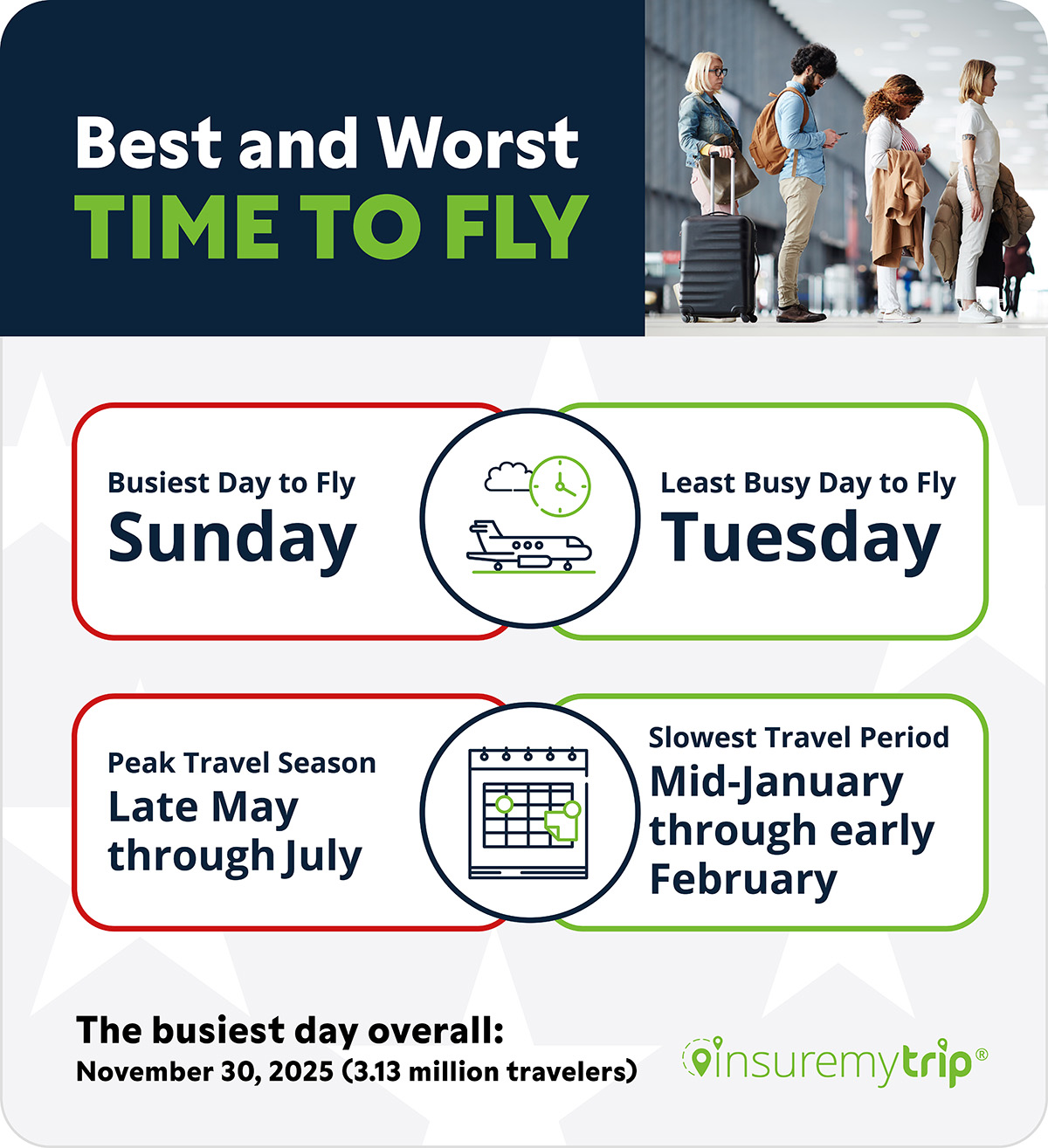
- Busiest day to fly: Sunday
- Least busy day to fly: Tuesday
- Peak travel season: Late May through July
- Slowest travel period: Mid-January through early February
- Busiest day overall: November 30, 2025 (3.13 million travelers)
Summer Is the Busiest Travel Season
If you’ve ever felt like the airport is packed in summer, you’re not imagining it.
From late May through late July, travel demand consistently peaks:
- Daily passenger counts regularly exceed 2.8 million
- Many Sundays top 3 million travelers
- Late June and mid-to-late July are the most crowded stretches
Holiday weekends like Memorial Day and July 4th add even more pressure, creating sharp spikes in already busy weeks.
What this means for you:
If you’re traveling in summer, expect crowds, especially on weekends, and plan extra time at the airport.

Winter Brings the Biggest Slowdown
On the flip side, the quietest time to travel comes right after the holidays.
From mid-January through early February:
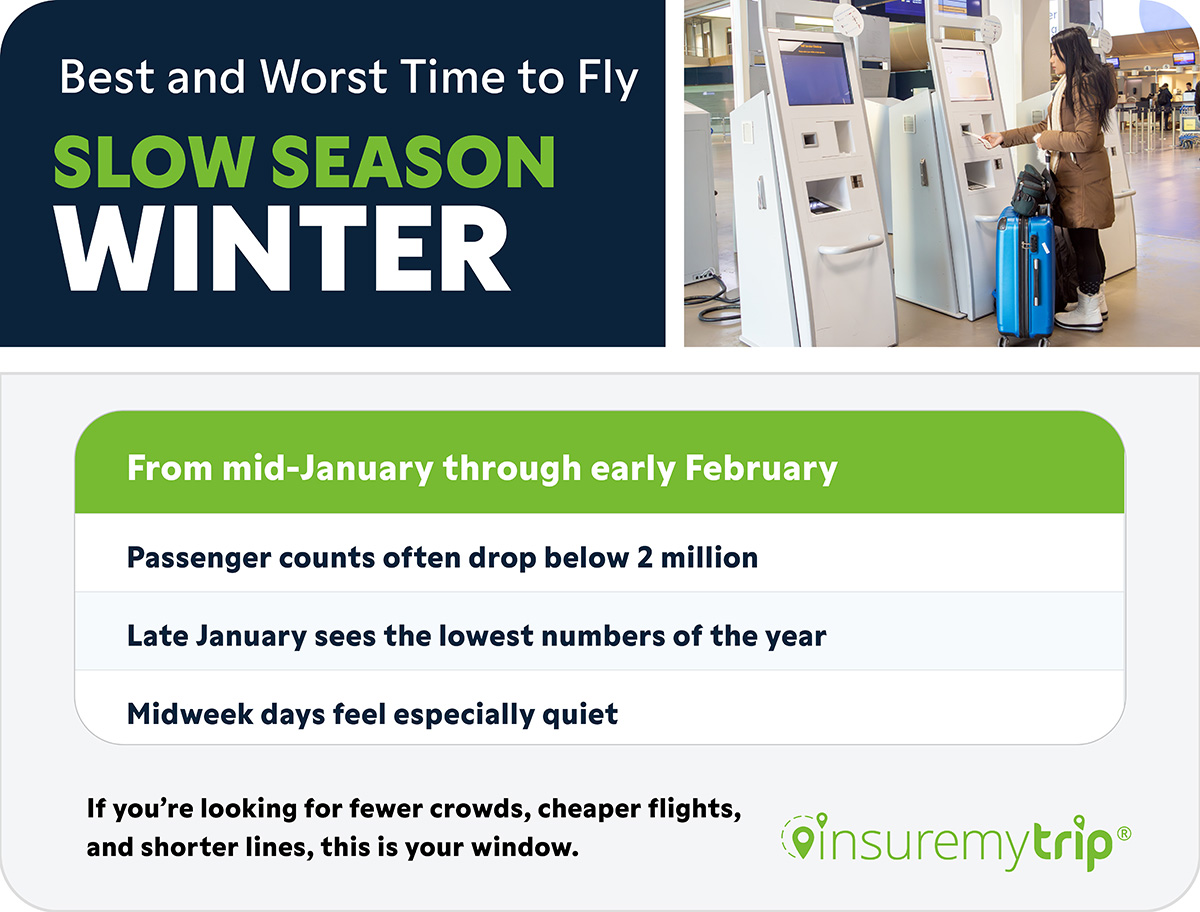
- Passenger counts often drop below 2 million
- Late January sees the lowest numbers of the year
- Midweek days feel especially quiet
What this means for you:
If you’re looking for fewer crowds, cheaper flights, and shorter lines, this is your window.
The Busiest (and Quietest) Days of the Week
Not all travel days are created equal, and this pattern barely changes year to year.
Busiest Days
- Sunday (by far the busiest)
- Friday
Why Sunday dominates:
- Weekend return travel
- End-of-holiday rush
- Back-to-work and school schedules
Least Busy Days
- Tuesday
- Wednesday
Midweek travel stays quieter because:
- Fewer leisure trips start or end midweek
- Lower business travel volume
- Fewer holidays fall on these days
What this means for you:
Flying on a Tuesday could mean a noticeably smoother airport experience compared to Sunday.
The Busiest Travel Day of the Year
Across all four years analyzed, one pattern stands out:
The Sunday after Thanksgiving is consistently the busiest travel day of the year.
The top day in the dataset:
- November 30, 2025: 3.13 million+ travelers
Other peak days also cluster around:
- Thanksgiving return weekend
- Early July
- Mid-summer Sundays
Key insight:
Return travel days, especially Sundays, are even busier than departure days.
The Quietest Travel Days
Two types of days consistently see the lowest traffic:
- Thanksgiving Day
- Late January weekdays
Thanksgiving Day, while part of a busy travel week, is surprisingly calm at airports, making it one of the least crowded days to fly.
A Predictable Travel Rhythm
Despite changes year to year, one thing remains consistent:
Weekly travel patterns barely change.
Average ranking from busiest to least busy:
- Sunday
- Friday
- Monday
- Thursday
- Saturday
- Wednesday
- Tuesday
Even during slower seasons, this order stays nearly identical.
Travel Is Getting Busier Overall
Another clear trend: peak travel demand is growing.
- 2023: 3 million–passenger days were rare
- 2024: More frequent
- 2025: Common, especially in summer
This suggests strong, ongoing demand for travel, especially during peak periods.
What This Means for Travelers
This data isn’t just interesting; it’s actionable.
- Want fewer crowds? Fly on a Tuesday or in late January.
- Traveling during peak times? Plan for longer lines and fuller flights.
- Booking around holidays? Expect the biggest crowds on return Sundays.
- Looking for balance? Thursday or Monday can offer a middle ground.
A small shift in your travel day could mean a smoother airport experience from start to finish.
What About 2026?
Early data from 2026 shows slightly softer travel numbers compared to previous years, especially in January.
Possible reasons include:
- Economic factors
- Weather disruptions
- Geopolitical events
- Calendar timing
It’s too early to call it a long-term shift, but it’s a trend worth watching.
Methodology
InsureMyTrip analyzed TSA checkpoint traveler volume data from 2023 through early 2026.
The study evaluated daily passenger totals to identify:
- Peak and low travel periods
- Weekly travel patterns
- Busiest and least busy travel days
- Year-over-year trends
Insights were based on aggregated passenger throughput across all U.S. TSA checkpoints.