Key points
- Scuba diving travel insurance may cover diving-related medical emergencies, emergency evacuation, trip cancellation, and dive equipment losses, depending on the policy.
- Not all standard travel insurance policies cover scuba diving, and some plans impose requirements such as certification, supervision, or depth limits.
- You can compare adventure travel insurance policies that cover scuba diving on SOVENTURE to find one that fits your diving activities, destination, and budget.
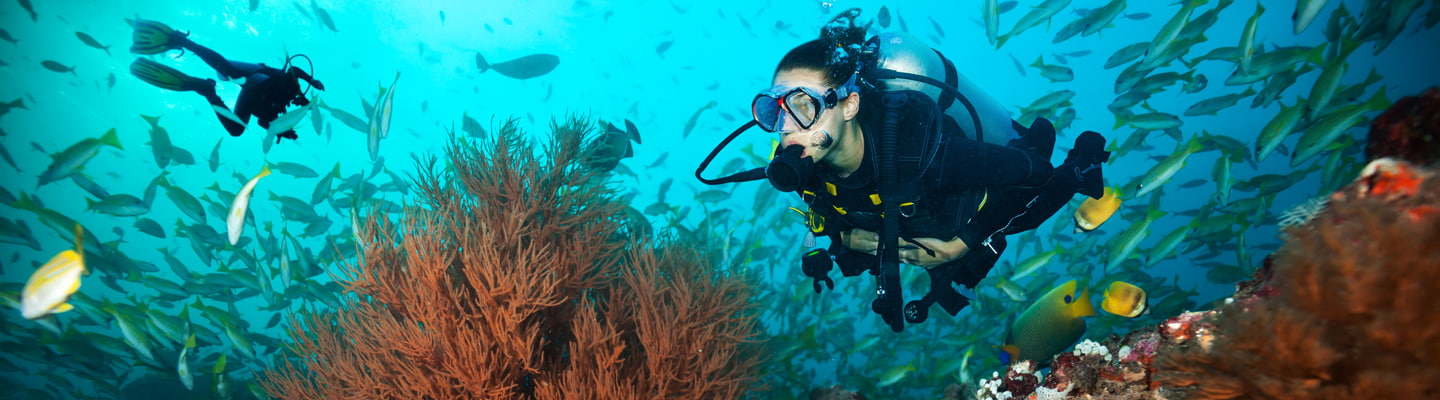
Scuba diving can take you to some of the world’s most incredible destinations, from coral reefs to wreck sites. But it also comes with unique risks, and not all travel insurance policies automatically cover scuba diving. Some plans may exclude diving entirely, while others only cover recreational scuba diving under certain conditions.
What is scuba diving travel insurance?
Scuba diving travel insurance is a comprehensive travel insurance plan that covers certain risks associated with recreational scuba diving, such as diving accidents, hyperbaric treatment, emergency evacuation, and specialized medical care.
Diving travel insurance coverage varies by policy, and some insurers require scuba diving to be specifically listed as a covered activity for benefits to apply.
Confirm that scuba diving is covered
One of the most important things to verify before buying travel insurance is whether scuba diving is covered under the policy.
While some travel insurance plans include recreational scuba diving as a covered activity, others may exclude diving or impose restrictions.
Coverage may depend on factors such as:
- Dive depth
- Certification level
- Professional supervision
- Type of dive activity
- Compliance with local regulations
- Use of proper diving equipment
Some policies may cover recreational scuba diving up to a certain depth, but exclude higher-risk activities such as cave diving.
Before purchasing a diving trip insurance policy, carefully review the covered activities section and exclusions.
How to verify your policy covers scuba diving
Follow these steps when comparing travel insurance plans:
- Check the “covered activities” or “adventure sports” section of the policy certificate for mentions of “diving.”
- Look for any depth limits stated in the policy and verify they align with your certification level and planned dives.
- Verify that your planned dive activities are not listed as exclusions.
- Contact the insurer directly if scuba diving coverage is unclear.
What does travel insurance for diving trips cover?
Travel insurance for diving varies by insurer and policy, but many plans include benefits designed specifically for divers.
On SOVENTURE, you can filter quotes by plans that include scuba diving as a covered activity. But you should still read the policy certificates carefully to understand the details of each plan’s coverage and exclusions.
Adventure sports coverage
Adventure sports are sometimes excluded from coverage, so it’s important to make sure scuba diving is covered in any plan you want to buy. Depending on the policy, you might need to purchase an optional adventure sports upgrade.
If you’re planning activities beyond basic recreational diving, you’ll definitely want to check they’re covered before you dive. This might include:
- Wreck diving
- Night diving
- Shark diving
- Shark cage diving
- Deep-water diving
- Advanced certification dives
Emergency medical coverage for diving accidents
Medical coverage is one of the most important benefits for scuba divers. In the event of a covered medical emergency, it can help pay for:
- Emergency room treatment
- Hospitalization
- Physician services
- Diagnostic testing
- Prescription medications
- Follow-up medical care
This table shows some diving injuries that might be covered by travel medical coverage, subject to policy terms and limits.
|
Diving Injury |
Description |
|
Decompression sickness (DCS) |
Caused by nitrogen bubbles forming in blood and tissues during ascent |
|
Arterial gas embolism |
Air bubbles entering the bloodstream, often from rapid ascent |
|
Barotrauma |
Pressure-related injuries affecting ears, sinuses, or lungs |
|
Marine life injuries |
Stings, bites, or cuts from underwater creatures |
|
Diving-related trauma |
Physical injuries occurring during dive activities |
Hyperbaric chamber treatment
One of the most valuable benefits for scuba divers is coverage for hyperbaric chamber treatment.
Hyperbaric oxygen therapy is commonly used to treat serious diving injuries, including:
- Decompression sickness
- Arterial gas embolism
- Certain pressure-related injuries
Some comprehensive travel insurance policies cover medically necessary hyperbaric chamber treatment as part of their emergency medical benefits.
Emergency evacuation and repatriation coverage
Many popular diving destinations are located on remote islands, offshore reefs, and coastal regions where advanced medical care may not be readily available.
If a serious diving accident occurs, you may need transportation to the nearest appropriate medical facility or recompression chamber.
Emergency evacuation coverage may help pay for:
- Air ambulance transportation
- Helicopter evacuation
- Boat evacuation
- Medical transfers between facilities
Some policies also include repatriation benefits that help cover transportation back home after a covered medical emergency.
Because evacuation costs can be substantial, this is often one of the most important coverages for international dive trips.
Search and rescue coverage
Some travel insurance policies include separate search-and-rescue benefits, but this coverage is not available in every plan.
Coverage may help pay for:
- Search operations
- Rescue services
- Emergency transportation
- Recovery efforts
This benefit can be particularly valuable for divers participating in offshore dives or diving in remote destinations.
Diving equipment protection
Many divers travel with expensive gear that could cost thousands of dollars to replace.
Baggage insurance may reimburse you if your equipment is:
- Lost
- Stolen
- Damaged during transit
- Delayed by a common carrier
When comparing policies, look for the per-item limit and maximum benefits of baggage coverage. Also look for exclusions, sub-limits, and optional upgrades, such as for sporting equipment.
This table shows some gear that might be covered by baggage insurance in a comprehensive travel insurance policy.
|
Equipment Type |
Description |
|
Dive computers |
Wrist-mounted or console devices tracking depth, time, and decompression status |
|
Regulators |
Breathing apparatus connecting tank to diver |
|
Masks |
Tempered glass masks for underwater vision |
|
Fins |
Propulsion equipment for underwater movement |
|
Buoyancy control devices (BCDs) |
Vests controlling ascent and descent |
|
Wetsuits |
Thermal protection suits |
Some policies may also reimburse the cost of renting replacement equipment if your baggage is delayed, while others require an optional Sporting Equipment Rental Benefit upgrade for this coverage.
Trip cancellation and dive vacation protection
Dive vacations often involve significant prepaid expenses.
Trip cancellation coverage may reimburse nonrefundable costs if you need to cancel for a covered reason before departure.
Covered expenses may include:
- Airfare
- Certification courses
- Charter fees
- Dive packages
- Dive resort bookings
- Hotel accommodations
Trip interruption coverage may help if you need to end your dive holiday early because of a covered event, such as severe weather or illness.
Does travel insurance cover scuba diving accidents?
It will depend on the terms and exclusions of the policy you buy. Many scuba diving travel insurance policies include conditions related to certification, training, supervision, or dive depth.
Requirements for coverage may include:
- Following recognized diving safety standards
- Holding an appropriate certification for the planned dive
- Diving within the limits of your training
- Diving with qualified operators when required
- Diving only to a certain depth
Some policies may exclude claims arising from dives that exceed recreational depth limits or fall outside the diver’s certification level.
If you plan to participate in advanced, technical, or specialty dives, review the policy language carefully before purchasing coverage.
How much does scuba diving trip insurance cost?
The average cost of comprehensive travel insurance is 4% to 10% of your prepaid, nonrefundable trip expenses.
The price you pay depends on several factors, including:
- Your age
- Destination
- Trip cost
- Trip length
- Coverage limits
- Number of travelers
- Optional adventure sports coverage, if required for diving coverage
- Other optional upgrades
When comparing quotes, focus on coverage details rather than simply choosing the cheapest option. A lower-cost policy may not include scuba diving coverage, hyperbaric treatment, evacuation benefits, or the medical limits you need.
When should I buy scuba diving travel insurance?
The best time to purchase scuba diving travel insurance is shortly after making your initial trip payment or booking your vacation.
Buying coverage early can help protect prepaid travel expenses and may provide access to certain time-sensitive benefits available under the policy.
This is especially important if you’re planning an expensive dive holiday that includes dive packages, international flights, or nonrefundable reservations.
How to choose the best travel insurance for diving
The best travel insurance for diving depends on your destination, diving activities, and coverage needs.
When comparing policies, consider:
Diving activity coverage
Confirm that scuba diving is specifically covered under the policy.
Medical coverage limits
Look for strong health and medical coverage, especially if you’re traveling internationally.
Hyperbaric chamber treatment
Review whether medically necessary recompression treatment is covered.
Emergency evacuation benefits
Evacuation coverage can be critical for divers visiting remote islands and offshore dive locations.
Search and rescue benefits
Search-and-rescue coverage may provide additional protection during offshore or remote dives.
Equipment protection
Review coverage limits for dive gear and sports equipment.
Annual vs. single-trip coverage
If you take multiple diving vacations each year, compare annual travel insurance plans with single-trip policies to determine which offers the best value.
Compare scuba diving travel insurance plans
Because coverage for scuba diving varies among insurers, it’s important to compare policies carefully before you purchase coverage.
While some travel insurance policies exclude scuba diving, others include recreational scuba diving as a covered activity or offer optional adventure sports coverage.
You can compare scuba diving travel insurance plans on SOVENTURE to find a policy that matches your diving activities, destination, and travel budget.
Is scuba diving travel insurance worth it?
Scuba diving travel insurance may be worth considering if you:
- Are traveling internationally to dive
- Have significant prepaid, nonrefundable trip expenses
- Need emergency evacuation protection
- Are bringing expensive dive equipment
- Want financial protection against diving-related medical emergencies
For many divers, the combination of medical coverage, evacuation protection, equipment coverage, and trip cancellation and interruption protection makes scuba diving travel insurance a valuable part of trip planning.
Frequently asked questions
What is scuba diving travel insurance?
Scuba diving travel insurance is travel insurance that may provide coverage for diving-related accidents, emergency medical treatment, evacuation, trip cancellations, equipment losses, and other covered events that occur during a diving vacation.
What does travel insurance for diving trips cover?
Depending on the policy, coverage may include emergency medical expenses, hyperbaric chamber treatment, emergency evacuation, search and rescue services, diving equipment coverage, trip cancellation, and trip interruption benefits.
Does travel insurance cover scuba diving accidents?
It will depend on the policy you buy and your specific dive plans. Some travel insurance policies cover diving up to a certain depth, such as 60 or 131 feet, and may require diving with a dive master or other conditions. Other plans only cover scuba diving if you add an optional adventure sports upgrade. Always verify that your planned diving activities are covered before your trip.
How much does scuba diving trip insurance cost?
Scuba diving travel insurance costs an average of 4% to 10% of your total trip cost. Comparing quotes from multiple providers can help you find the right policy.
When should I buy scuba diving travel insurance?
You should generally purchase coverage shortly after booking your trip to maximize protection for prepaid travel expenses and gain access to available time-sensitive benefits.
What is the best travel insurance for diving?
The best travel insurance for diving is the policy that offers the right combination of scuba diving coverage, emergency medical protection, evacuation benefits, hyperbaric chamber treatment coverage, equipment protection, and trip benefits for your specific travel plans.
Does travel insurance cover hyperbaric chamber treatment?
Yes, some travel insurance plans cover medically necessary hyperbaric chamber treatment related to covered diving injuries, subject to policy terms, conditions, and limits.
Does scuba diving travel insurance cover dive equipment?
Yes, certain policies provide coverage for lost, stolen, damaged, or delayed dive equipment, subject to policy limits and exclusions.
Can I get annual scuba diving travel insurance?
Yes. Some insurers offer annual travel insurance plans that may be appropriate for frequent divers who take multiple dive trips each year. Comparing annual and single-trip options can help determine which provides the best value.
Disclaimer: The information contained in this article serves as a general overview of benefits and should only be used for informational purposes. Refer to your individual certificate of insurance for specific coverages, exclusions and benefits. When in doubt, please contact one of our licensed agents for additional assistance.