

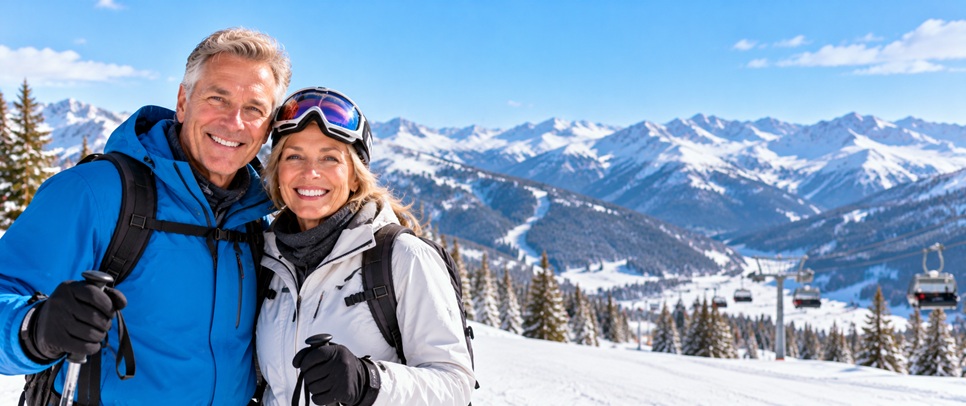
The best travel insurance for a ski trip is the plan that covers the type of skiing you intend to do and provides appropriate protection for your medical, rescue, equipment and prepaid-trip risks.
A weekend at a nearby resort may require different coverage than a week of skiing abroad. Where you go, the terrain you plan to ski, and how much you’ve paid upfront can all shape your choice. Here’s what to consider before buying.
1. Does the Policy Cover Skiing (Including the Type You’re Planning to Do)?
Don’t assume that a travel insurance plan covers skiing just because it includes emergency medical benefits. Some policies cover recreational skiing, while others exclude it or require an optional sports upgrade.
Consider your itinerary before you buy. An afternoon on marked resort trails is different from heading off-piste or into the backcountry, and insurers may treat those activities differently because of the risks involved.
Before you buy, review the policy’s activity terms, noting any of the following:
- Terrain restrictions: Does coverage apply only on designated trails or within resort boundaries?
- Guide requirements: If the policy covers off-piste skiing, are you required to have a qualified guide?
- Higher-risk activities: Are racing, competitions, terrain parks, or heli-skiing excluded from the base policy?
- Available upgrades. If the base plan doesn’t cover your activities, can you purchase an optional sport or adventure travel benefit?
2. What Medical Coverage Will You Have at Your Destination?
Before you shop for ski travel insurance, find out if your health insurance will cover you at your destination.
If you’re traveling domestically, find out how any emergency care and follow-up visits will be handled if you’re injured or ill away from home. Even if your health insurance covers care at your destination, you may still face out-of-network costs or gaps in coverage for mountain rescue and medical evacuation.
If you’re traveling internationally, find out if your policy provides coverage while you’re abroad. For example, Original Medicare generally doesn’t cover medical care outside the U.S., except in limited circumstances.
After you determine any available health insurance, consider the following as they relate to any travel plan you’re considering:
- Medical limit: The most your travel insurance will pay for covered medical care. Some treatments or services may have lower limits.
- Deductible: Check whether the travel policy requires you to pay part of covered medical expenses before benefits apply. Some plans have a $0 deductible.
- Payment process: Find out whether you’ll need to submit a claim to your regular health insurer first or pay medical bills yourself and request reimbursement.
InsureMyTrip Tip: Travel medical insurance may suit an international trip when medical care is your main concern. If you also want protection for cancellations and prepaid bookings, compare comprehensive travel insurance plans.
3. What Rescue and Evacuation Benefits Are Included?
Check mountain rescue coverage separately from medical and evacuation benefits. A high evacuation limit alone doesn’t mean the policy will pay to locate you or bring you down the mountain.
- Search-and-rescue coverage, when included, may help with eligible efforts to find and assist someone who is lost, stranded, or injured. Ask specifically about ski patrol services and transport from the slopes, since coverage can vary.
- Emergency medical evacuation coverage generally covers medically necessary transport to an appropriate medical facility when adequate care isn’t available locally. It doesn’t automatically cover a flight home or transport to your preferred hospital.
Read each policy’s evacuation terms and rescue benefits. Determine the limits, who coordinates transport, and when approval is required.
InsureMyTrip Tip: Once you buy a policy, save the assistance number somewhere easy to access if you or a covered traveling companion needs rescue or evacuation services. This will save you from searching through emails on the mountain, where you might not have service.
4. What Happens to Your Prepaid Costs if You Cancel or Leave Early?
Before you start shopping for coverage, list all your prepaid costs and any cancellation or refund rules that apply. Your flight might be nonrefundable; your lodging might offer a partial refund, and an excursion or lesson will likely have different deadlines.
Ask the insurer which expenses you can include in your insured trip cost and find out how to add additional coverage if your needs change.
As you review your insurance needs, keep the following coverages in mind:
- Trip cancellation coverage may reimburse eligible prepaid, nonrefundable expenses if you cancel before departure for a covered reason, such as a qualifying illness or injury.
- Trip interruption coverage may help with eligible unused expenses and additional transportation costs if a covered event interrupts your trip after it begins.
InsureMyTrip Tip: If an injury keeps you off the slopes, some plans may reimburse eligible unused lift passes, lessons, or rentals. Check whether this benefit applies if you remain at the resort and what medical documentation is required.
5. Does the Plan Cover Weather Disruptions and Resort Closures?
A storm that cancels flights or a warm spell that leaves slopes bare can both disrupt your trip, but insurers treat them differently.
Trip cancellation coverage may reimburse eligible prepaid, nonrefundable costs if severe weather forces you to cancel for a covered reason, such as a snowstorm that shuts down transportation for the period your policy requires. An unfavorable snow report alone generally isn’t enough to trigger coverage.
For disruptions on the way there, review travel delay coverage. It may reimburse eligible meals or lodging after a covered delay reaches the policy’s minimum length. Compare the daily allowance and the total limit, especially if you’re traveling as a family.
InsureMyTrip Tip: Want flexibility to cancel over poor snow conditions? Optional Cancel for Any Reason (CFAR) coverage typically reimburses 50% to 75% of eligible prepaid, nonrefundable costs. Purchase and trip-cost requirements apply, and cancellation is generally required at least 48 hours before departure, sometimes earlier, so don’t count on waiting for a last-minute snow report.
6. Will Equipment Coverage Be Enough for Your Gear?
If you’re bringing your own skis and boots, read the equipment terms before relying on the baggage limit shown in a travel insurance quote.
Baggage coverage can have a total limit and a smaller limit for each item. For example, if a policy has $2,500 in baggage coverage and a $250 per-item limit, it wouldn’t reimburse the full value of a $900 pair of skis.
Ask how the policy handles sports equipment, including whether it covers damage during use. Also check how reimbursement is calculated and what proof of ownership is needed.
If your gear arrives late, ordinary baggage delay benefits may focus on essentials such as clothing and toiletries. Rental reimbursement may require a separate sports equipment benefit. Confirm the waiting period and rental allowance before counting on it for your first morning of skiing.
InsureMyTrip Tip: Photograph your equipment before departure and keep receipts where you can find them. If something goes missing in transit, get a written report from the carrier.
7. What Purchase Deadlines and Pre-Existing Condition Rules Apply?
Compare insurance soon after your first trip payment, since options such as a pre-existing condition waiver and CFAR have purchase deadlines.
A waiver removes the pre-existing condition exclusion for otherwise covered claims if you meet the requirements. These may include buying on time, insuring the required trip costs, and being medically able to travel at the time of purchase.
Certain medical conditions or treatments may require additional considerations. For example, a recent knee treatment or medication change may show up in a medical history examination, also known as a look-back period. Policy wording determines whether a health issue falls within the look-back period.
InsureMyTrip Tip: Missing a waiver deadline doesn’t necessarily prevent you from buying insurance. It can, however, exclude claims related to a pre-existing condition. Check CFAR deadlines at the same time if you want that option.
How to Compare Travel Insurance for a Ski Trip
- Gather your trip details. Have your travel dates, destination, first payment date, and any prepaid, non-refundable costs on hand.
- Confirm your activities are covered. Check the rules for your planned skiing and see whether any sports or adventure upgrades are required.
- Compare benefits and prices. Use the same trip details across multiple quotes, and then review medical, rescue, cancellation, delay, and equipment coverage details.
- Read the policy before buying. Check limits, deductibles, exclusions, and purchase deadlines, including for pre-existing condition waivers. An InsureMyTrip licensed agent can help clarify your options.
How to Find the Best Travel Insurance for Ski Trips FAQ
Do I Need Travel Insurance for a Domestic Ski Trip?
It depends on your existing coverage and how much you could lose if you cancel. Your health insurance may cover medical care within the U.S., but check out-of-network costs and mountain rescue coverage. Travel insurance may also help protect eligible nonrefundable bookings and cover certain travel disruptions.
Does Travel Insurance Cover Off-Piste or Backcountry Skiing?
Some plans cover off-piste and backcountry skiing, but others exclude them or require an optional sports or adventure coverage add-on. If they are covered, it may be only under certain conditions, such as being accompanied by a qualified guide. Check the policy’s definitions and activity restrictions before buying, even if it covers recreational skiing.
Can I Cancel My Ski Trip Because There Isn’t Enough Snow?
Lack of snow isn’t usually a covered cancellation reason, but some policies offer specific benefits for ski area closures caused by insufficient snow. Optional Cancel for Any Reason (CFAR) coverage offers more flexibility, but it has purchase requirements, cancellation deadlines, and partial reimbursement limits—often only 50% to 70% of eligible prepaid, nonrefundable costs.
Does Ski Travel Insurance Cover Rented Equipment?
Some plans may reimburse replacement rental costs if your own equipment is lost or delayed. That doesn’t necessarily cover damage to skis you rent at the resort. Check the policy’s equipment benefits and exclusions, along with the rental shop’s damage protection options.


